A pantry list that matches how you cook
Standard store cupboard lists are written for somebody else's kitchen. Build yours backwards, from the ten meals your household actually repeats.
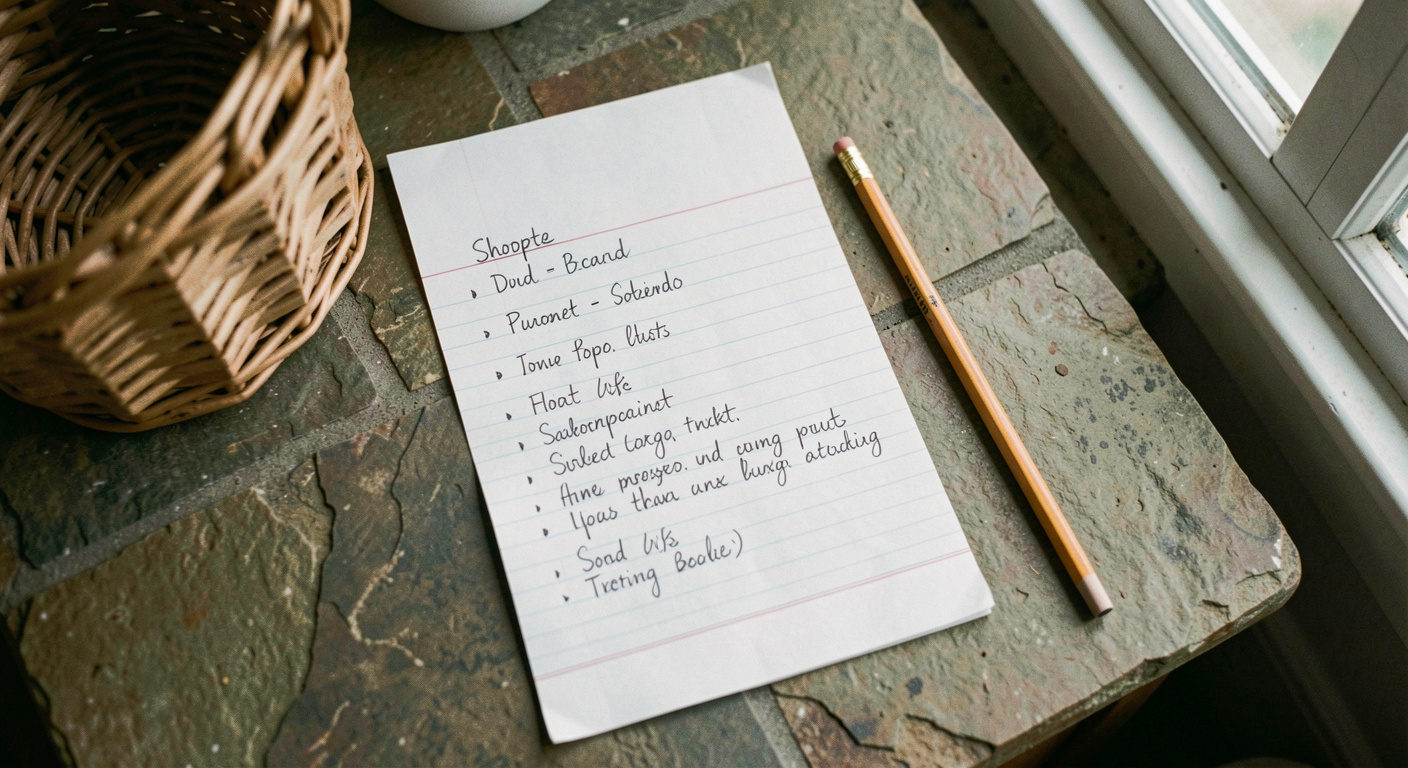
Every published store cupboard list contains the same forty items, and every household that follows one ends up with three of them opened and thirty-seven aging quietly at the back. Star anise, pomegranate molasses, five kinds of vinegar. They are not wrong, they are simply somebody else's cooking.
A pantry list that works is built the other way round. Not from a list of ingredients that a well stocked kitchen ought to hold, but from the meals your household actually repeats, counted over a real month.
Start with the meals, not the shelf
Write down what was eaten at home for four weeks. Not what you meant to cook, what was cooked. Almost every household discovers the same thing: between eight and twelve dishes account for roughly three quarters of all evening meals, and they rotate on a cycle of about a fortnight.
That list of eight to twelve is the specification. A tomato and lentil soup, a roast chicken and what follows it, a pasta with whatever is in the fridge, a curry from a jar of paste, eggs on toast on the night nobody wants to cook. Write each one out with its ingredients, then cross off everything that is bought fresh for the day. What remains is the store cupboard, and it will be shorter than any published list.
Three tiers, and only three
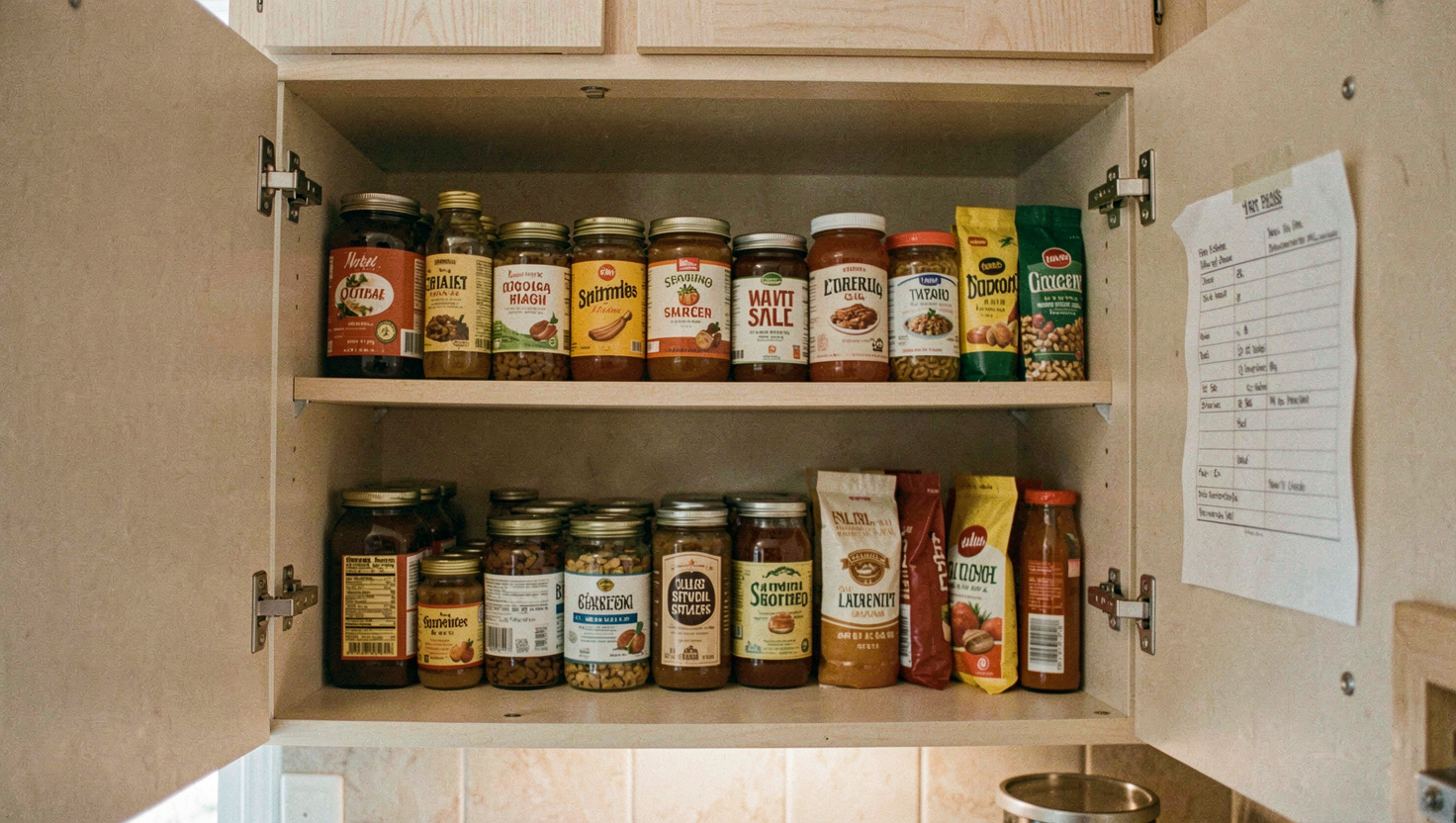
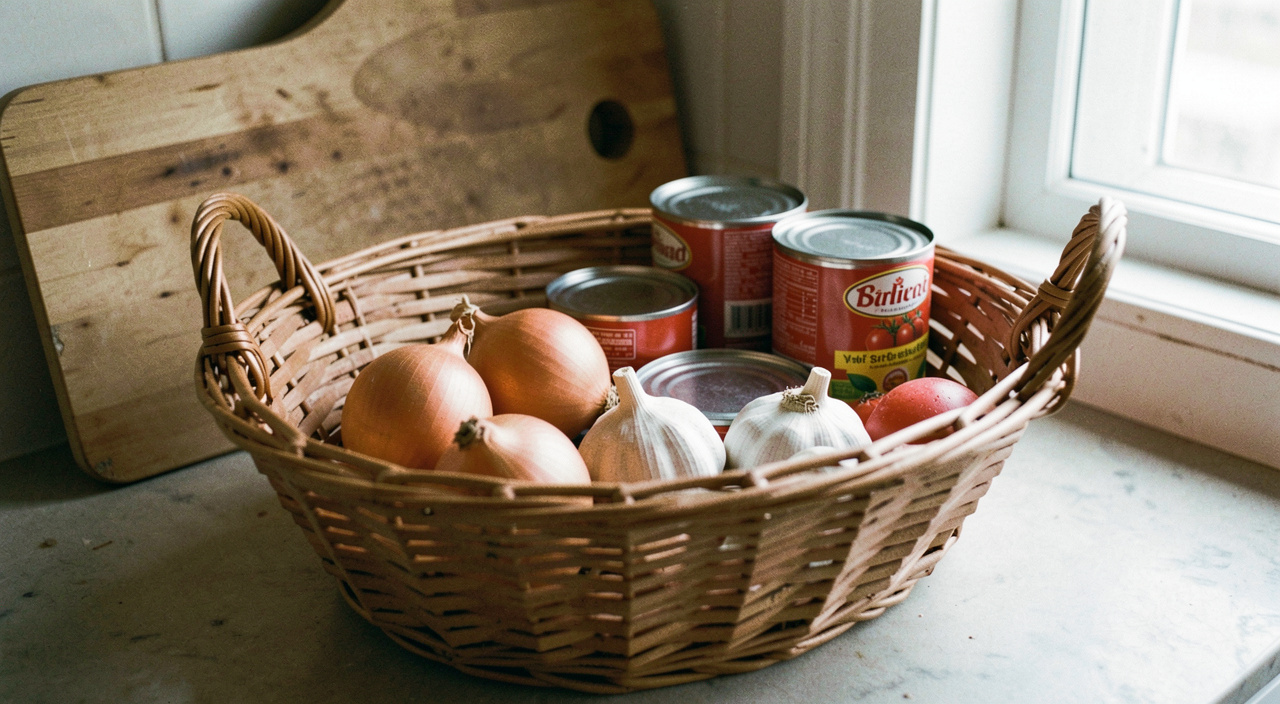
- Never run out. The dozen items that appear in more than half the repeat meals. Tinned tomatoes, dried pasta, rice, stock, onions, garlic, olive oil, salt, tinned pulses, flour, tea, eggs. If one of these is missing the evening changes shape, so these carry a minimum count.
- Keep one spare. Items used weekly but replaceable in the moment: soy sauce, mustard, tinned fish, coconut milk, dried herbs, honey. One in use, one behind it, nothing more.
- Buy for the dish. Everything else. Bought when a specific meal is planned, not held on principle. This is where the star anise belongs, and it is also where most wasted money goes.
Set a par level on the first tier and write it on the shelf edge or on the label of the container, not on a separate sheet that nobody reads. Six tins of tomatoes, two kilos of pasta, four tins of pulses. The rule is then mechanical: when stock drops below the number, the item joins the shopping list. Nobody has to remember, and nobody has to survey the cupboard before every shop.
Sizing it to the space you have
The list has to fit the cupboard, not the ambition. A single wall cupboard 600 mm wide with three shelves holds roughly what a two person household eats in a fortnight, and trying to hold a month in it produces a cupboard where the front row hides the back row and nothing is ever seen.
Two practical constraints follow. Store in a single row where you can, or in rows deep enough that the back one can still be reached without unloading the front. And leave one shelf, or one clear third of a shelf, with nothing on it, so that a big shop or a bulk offer has somewhere to go. Slack is what keeps a system usable, and the argument for it is set out in the empty shelf is not wasted space.
Writing the list so it survives
Keep it in the order of the cupboard, not alphabetically and not by food group. Reading a list that follows the shelves means the check takes ninety seconds and the eye does the work. Keep it on paper, near the cupboard, with a pencil on a string, because a list on a phone requires a decision to open it.
Group the shopping list by aisle for the same reason. A list written in the order of the shop is a list you walk once, and a shop walked once is a shop with fewer additions to the trolley.
Review the list twice a year, and be honest about the items that never move. Anything untouched for six months either goes on the tier three list or leaves the house. The store cupboard is not an archive. The same twice-yearly review runs on the bathroom shelf, where what never moves is a medicine past its date: the medicine cupboard keeps a smaller stock and stricter paperwork than the pantry does. In a household that grows any of its own food the list gets a third review in midsummer, when the garden starts feeding the cupboard in waves, which is one of the questions settled in before a kitchen garden.
What the list does not do
It does not tell you which tin to open. A well stocked cupboard still loses food at the back if new stock is pushed in front of old, and the only defence is loading behind, which is the whole of rotating a store cupboard first in, first out.
It does not plan the week. The list says what is held, not what will be cooked on Thursday, and the two are different jobs. The second is done in ten minutes with the calendar on a Sunday, when the nights nobody will cook are already visible.
And it does not turn into meals by itself. The cupboard is a starting position: it means that on any evening, with nothing bought, there is a meal in the house. What is worth cooking in quantity from those ingredients is a separate question, answered in batch cooking that does not taste like leftovers.
Do the four week count first. It is the only part that takes any effort, and everything after it is arithmetic.
A pantry list only earns its keep when it follows the cooking, not the other way round. Write down what actually leaves the shelf in a fortnight, then stock to that. The same discipline shows up elsewhere: laying a table for a group depends on the number of people, the surface and the order of serving agreeing, and a table fails when one of the three is settled late. The list and the table are both decided in advance or not at all.
A pantry list only works when it follows the cooking, not the shelf. Write down what leaves the kitchen in a normal week, then buy jars and tins to match that, and nothing else. The list stays short, and the space it frees goes to the utensils worth the space, the knife, pan and colander that do the daily work. A kitchen that cooks from the garden all year keeps its stores in step with the pot, so the list is rewritten each season rather than each year.