A cupboard of simple preparations
What to keep in the kitchen cupboard for a foot soak or a scrub, when a sugar and oil mix beats a bought one, and how a lunar calendar sets garden days.
The practice of running a home, written down.
Filed from March 2026
Section
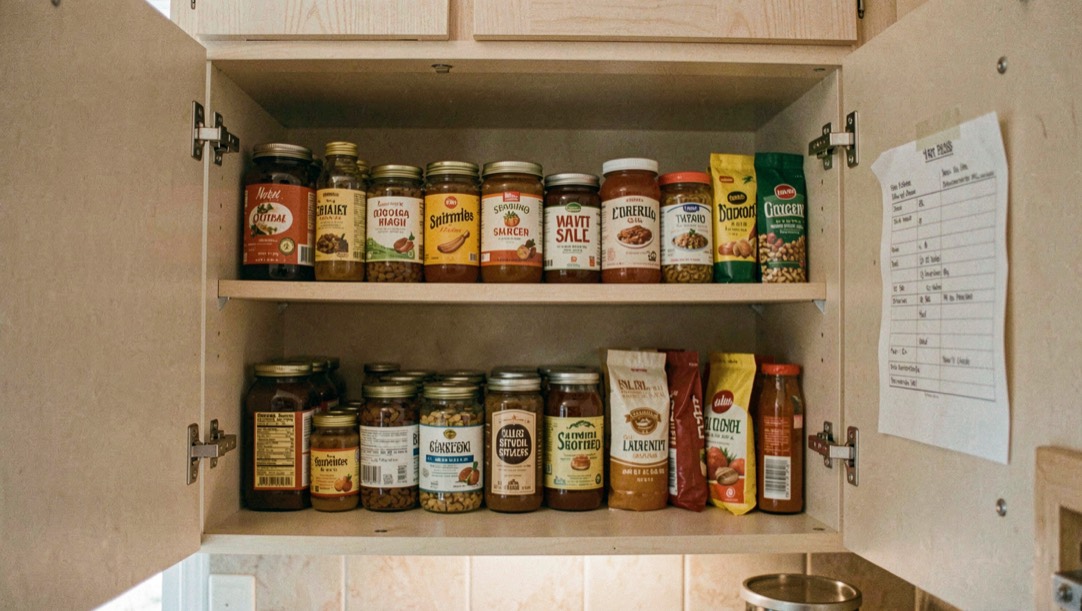
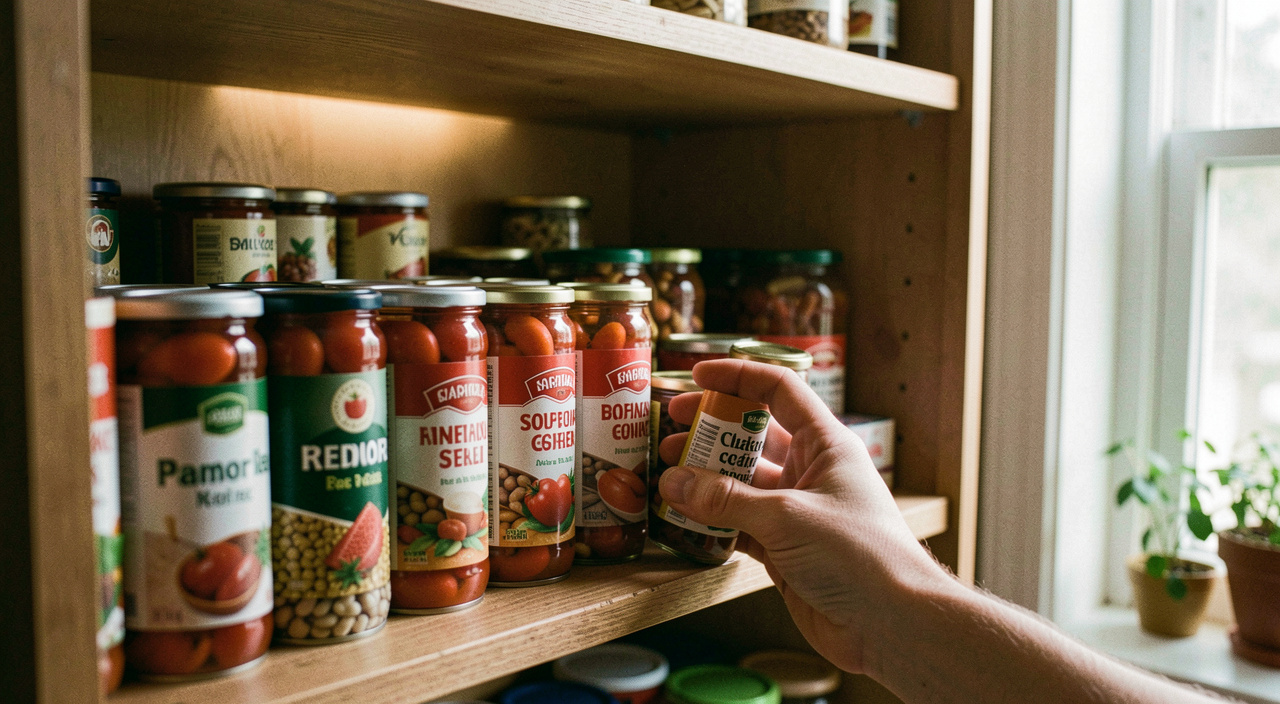
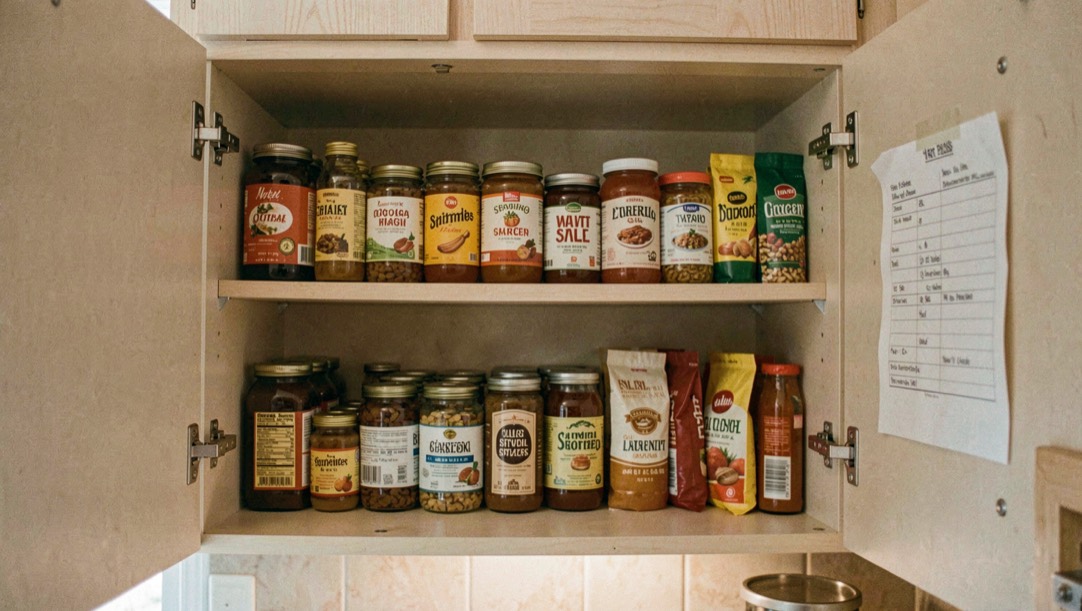
A store cupboard is not a collection of ingredients, it is a promise that on any evening, with nothing bought, there is a meal in the house. Most published pantry lists break that promise, because they are written for somebody else's cooking and fill a cupboard with items that are opened once. This shelf works the other way round, from the eight to twelve dishes a household actually repeats.
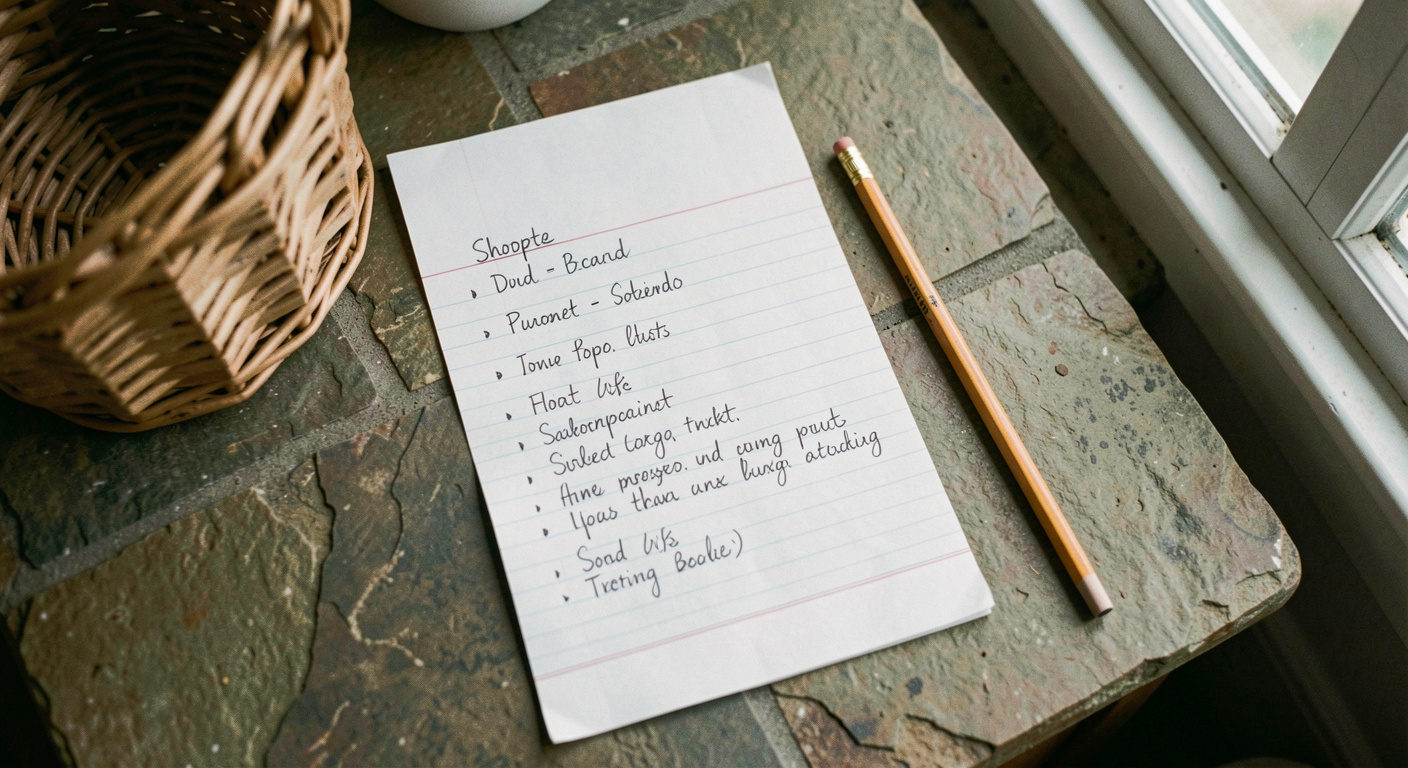
The entries here are built on three habits that fit together: a list with a minimum count written on the shelf edge, new stock loaded behind old so nothing is lost at the back, and a base cooked in quantity but finished fresh on the day it is eaten. Each entry says what the habit costs per week in minutes and where it fails. When the limit turns out to be the shelf rather than the shopping, the entry points to storage, and when the week itself is the problem, it points to the ten minutes with a calendar described in routines.
What to keep in the kitchen cupboard for a foot soak or a scrub, when a sugar and oil mix beats a bought one, and how a lunar calendar sets garden days.
A no-knead loaf starts the week, then leftovers carry it: what to cook without a recipe, and the small repairs worth doing before the heating season.
What makes a table work for a group, which restaurant habits are worth keeping at home, and how a table is booked and held for a party.
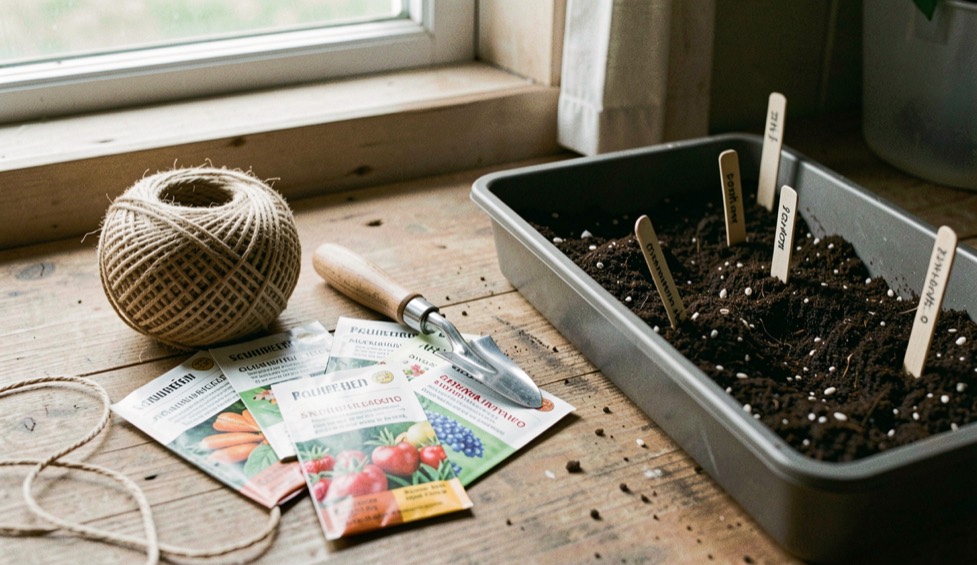
Sowing indoors, pricking out and what a late-winter windowsill really gives: a plain guide to light, timing and handling seedlings.
What to grow in a small kitchen garden, how to deal with a glut in one evening, and which utensils earn their place on the worktop.
A kitchen garden is decided before it is dug: what a plot asks of a week, how much ground is enough, and what the harvest does to the pantry.
The medicine cupboard is a store cupboard with paperwork: what belongs in it, how to read the leaflets, and when to clear it out.
Standard store cupboard lists are written for somebody else's kitchen. Build yours backwards, from the ten meals your household actually repeats.
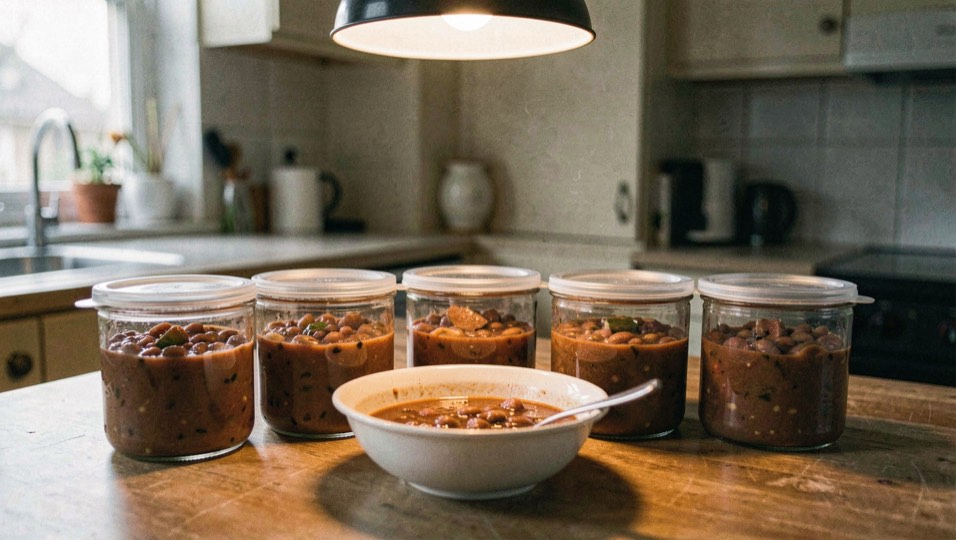
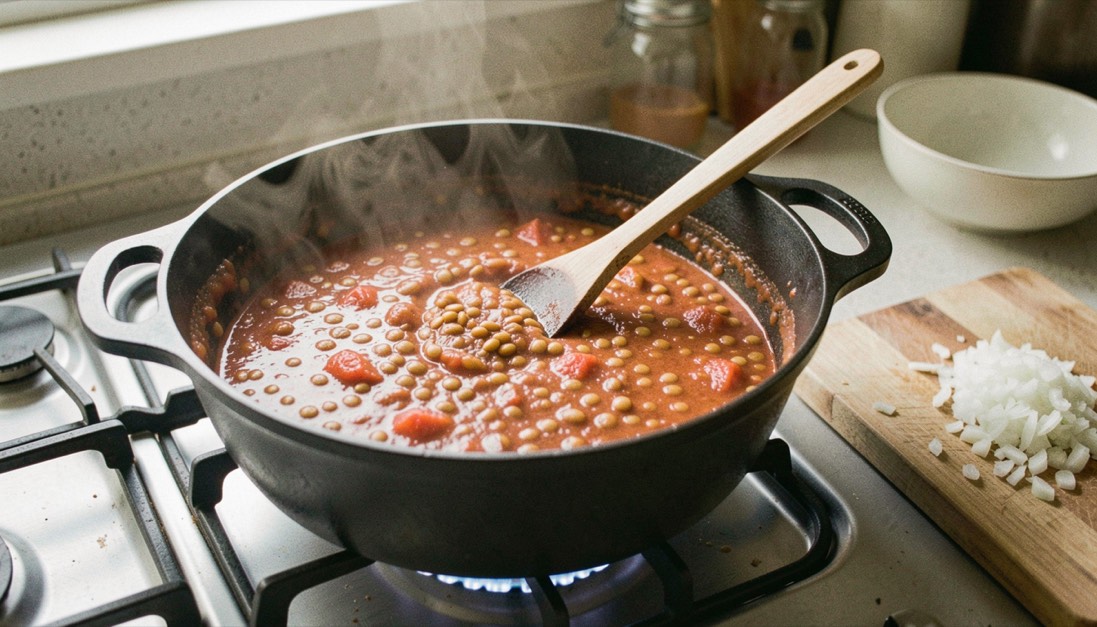
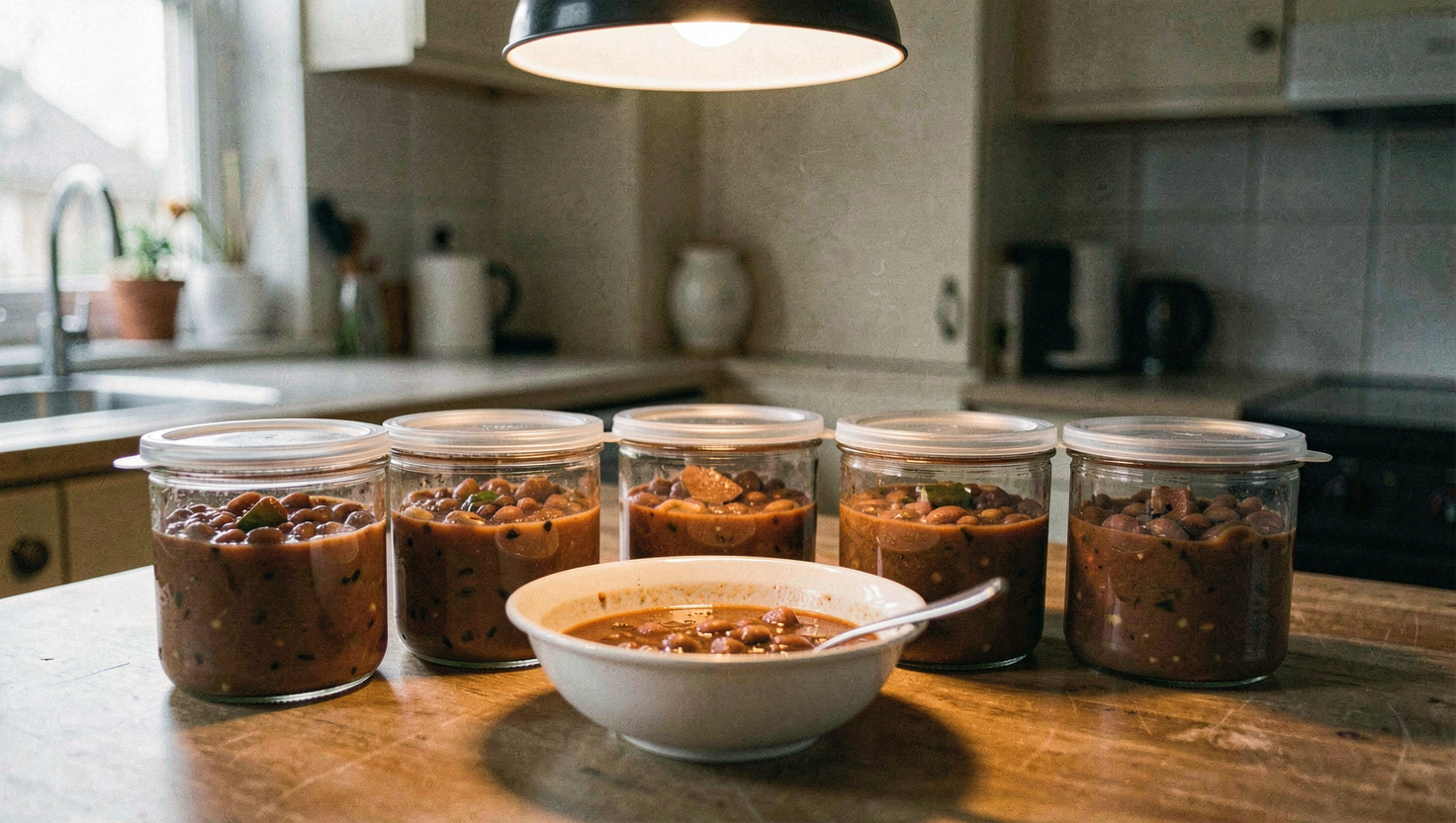
Cook the base in quantity and finish each portion on the day. The difference between a stock and a meal is fifteen minutes of fresh work at the end.
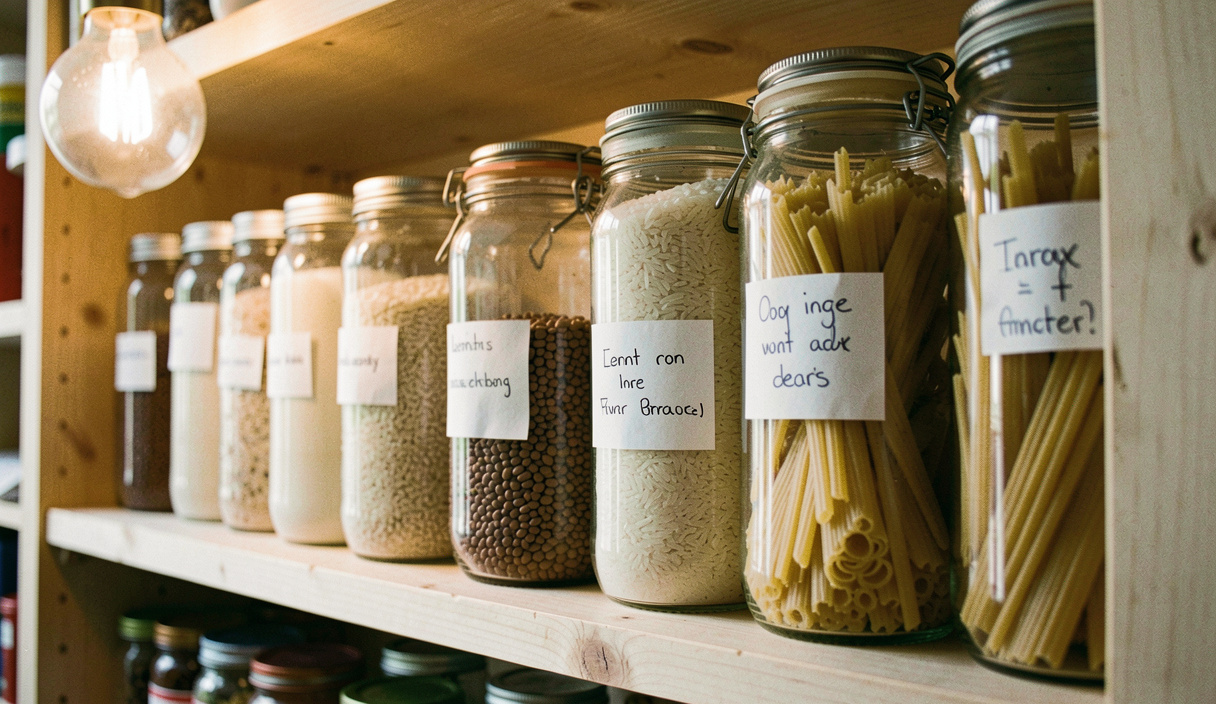
A store cupboard fails at the back, quietly, in tins nobody reached. Loading new stock behind the old is the whole method, and it costs a minute per shop.