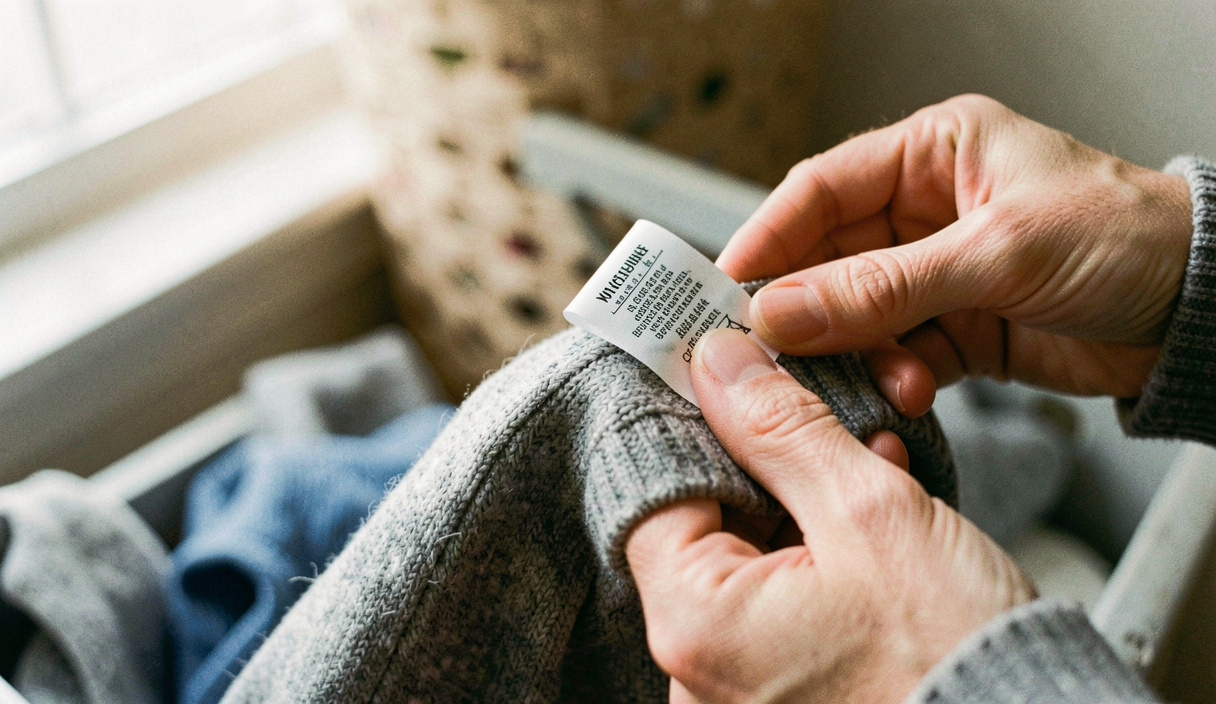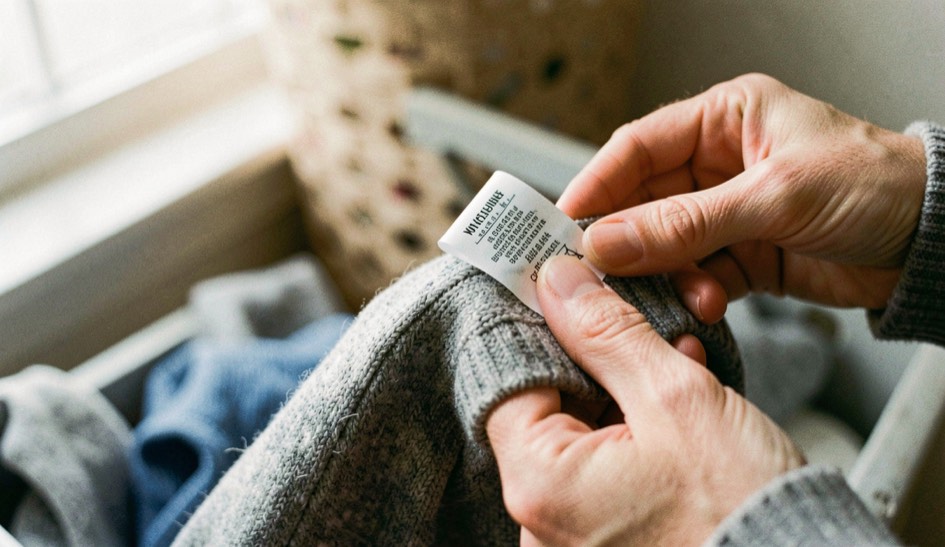
Reading a denim label before it goes in the wash
Denim wears for years if it is bought and washed on what the label actually says: weight, weave and the symbols that matter.
The practice of running a home, written down.
Filed from March 2026
Section
Textiles are the part of a household that is replaced most often and understood least. Towels go hard within a year, a jumper comes out of the machine two sizes smaller, and washing dried in a closed bedroom puts nearly two litres of water into the air and onto the coldest wall in the house. Almost all of it comes down to three variables: temperature, agitation and where the water goes afterwards.
Entries on this shelf say what a symbol commits you to, where the fabric itself overrules the label, and what a routine costs in loads per week. Numbers are given where they exist, in degrees, in revolutions per minute and in grams per square metre, because those are the figures printed on labels and machines. Where a laundry habit turns out to be leaving marks on the building, the entry points to upkeep, and where the question is really how much linen a household should hold at all, it points to storage.
Denim wears for years if it is bought and washed on what the label actually says: weight, weave and the symbols that matter.
Five symbols carry everything a garment needs. Once the tub, the triangle, the square, the iron and the circle are read properly, the wash becomes a decision instead of a risk.
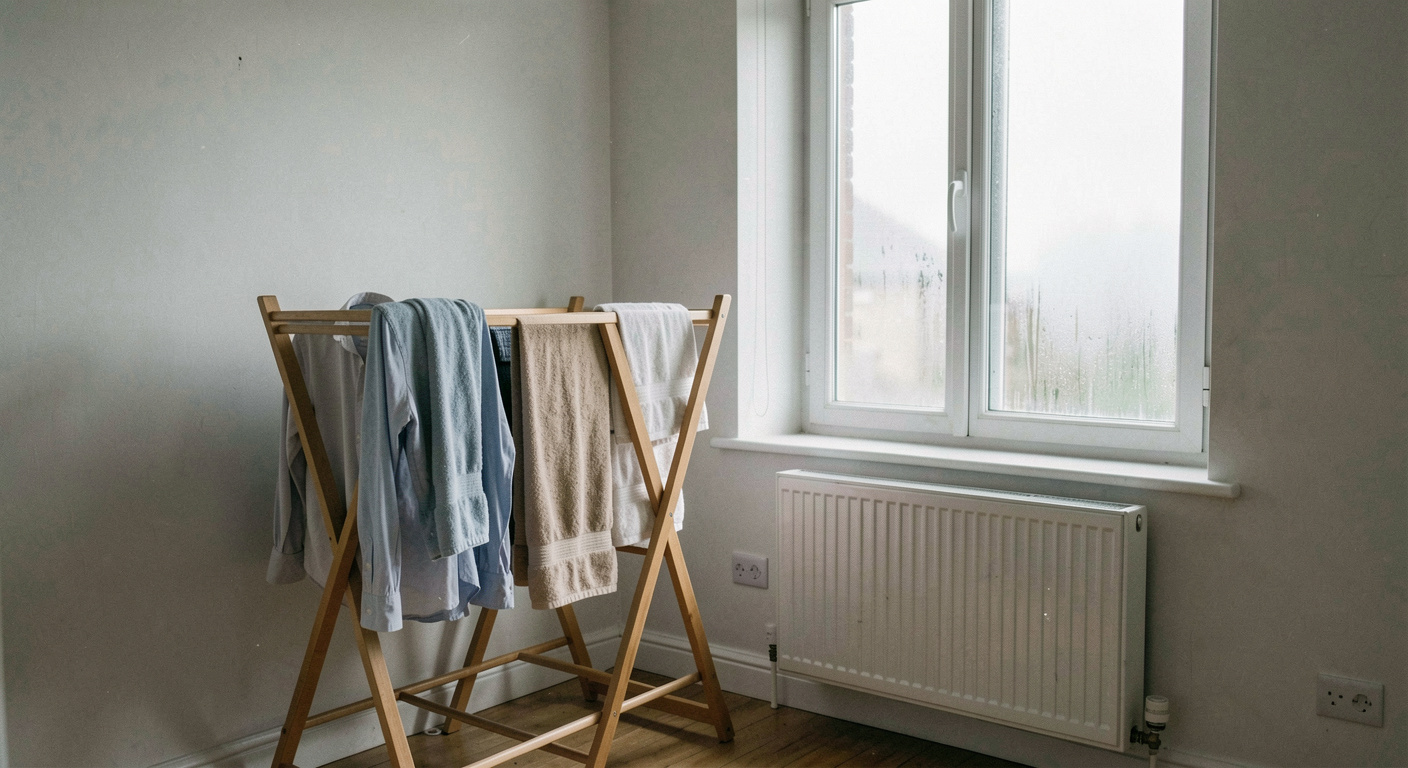
Washing dries indoors on two conditions: moving air and somewhere for the moisture to go. Get those wrong and the wall behind the airer pays for it.
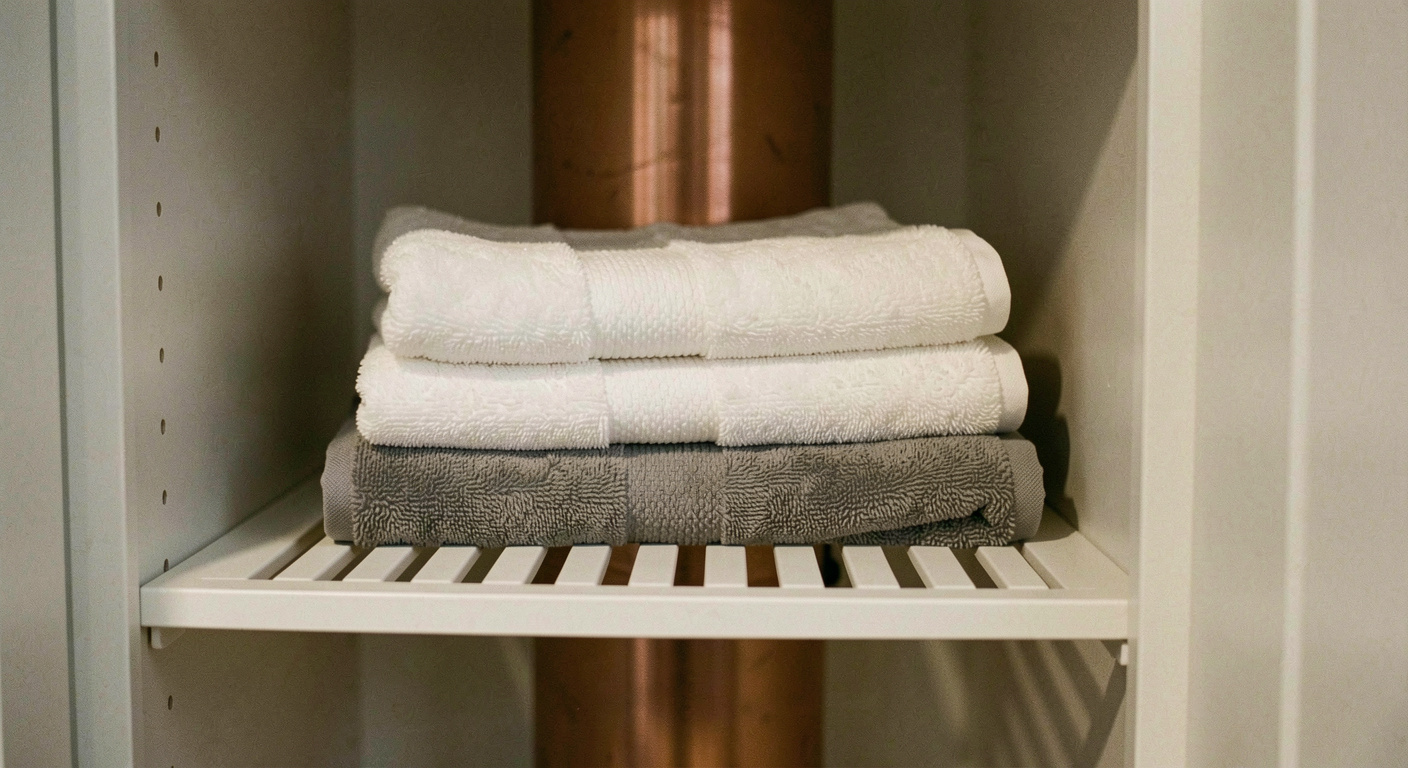
Four towels per person, two in service and two in the cupboard, is enough for a household that washes weekly. It also stops towels dying of overwork in the same month.