Reading a care label without guessing
Five symbols carry everything a garment needs. Once the tub, the triangle, the square, the iron and the circle are read properly, the wash becomes a decision instead of a risk.
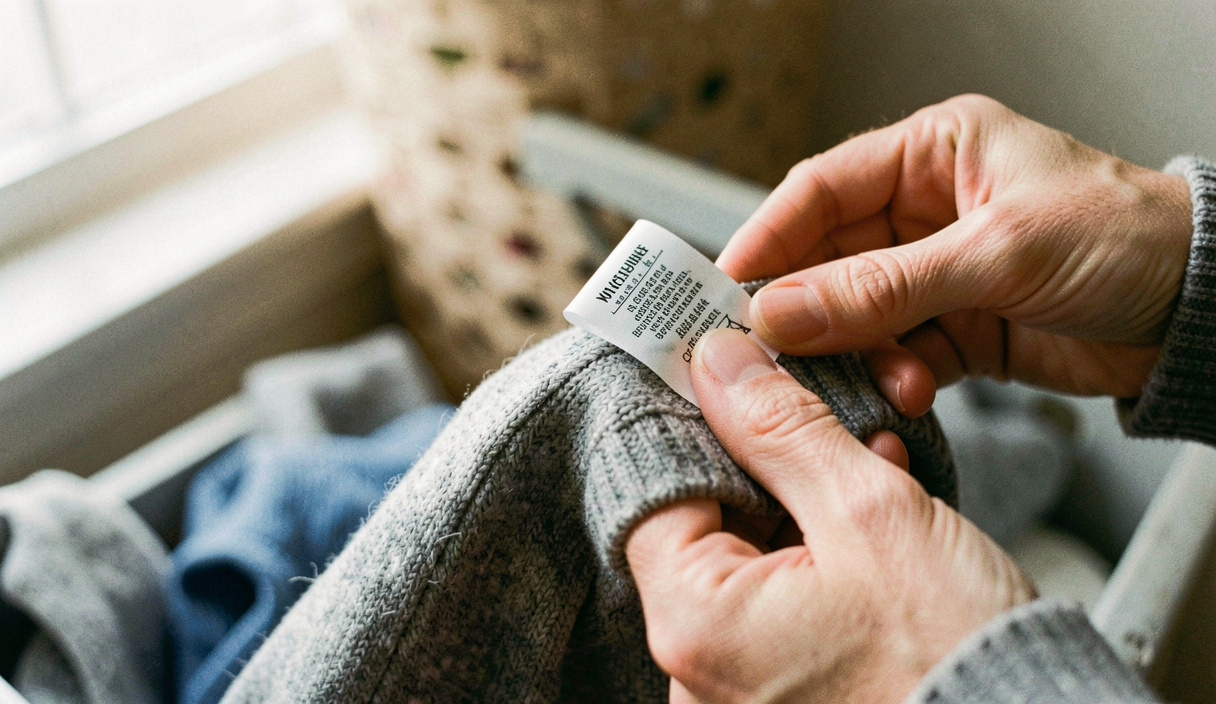
The label sewn into a side seam is the only instruction a garment ever gives, and most of it is ignored because five small symbols look like a code. They are not a code. They are five separate decisions, always in the same order, and once the order is known the label takes four seconds to read.
The order is fixed by convention: wash, bleach, dry, iron, professional care. Tub, triangle, square, iron, circle. If a symbol is missing, that treatment is simply not specified. If a symbol has a cross through it, the treatment will damage the garment.
The five symbols
- The tub is washing. The number inside is the maximum temperature in degrees, commonly 30, 40 or 60. A single bar under the tub means a reduced spin and a gentler action. Two bars mean the delicate cycle. A hand in the tub means hand wash only, at around 40 degrees or below, and a crossed tub means do not wash in water at all.
- The triangle is bleach. Empty triangle, any bleach is allowed. Two diagonal lines inside, oxygen bleach only, which is what most colour-safe stain removers contain. Crossed out, no bleach, and that includes many whitening powders.
- The square is drying. A circle inside the square is the tumble dryer: one dot is low heat, two dots normal. Crossed out means no tumble drying. A square with one horizontal line means dry flat, which matters for knitwear. Vertical lines mean drip dry, a diagonal line in the corner means dry in the shade.
- The iron is ironing. One dot is up to 110 degrees for synthetics and silk, two dots up to 150 for wool and polyester blends, three dots up to 200 for cotton and linen. A cross under the iron means no steam.
- The circle is professional cleaning. A letter inside tells the cleaner which solvent to use, which is information for them and not for you. What concerns a household is whether the circle is crossed out.
What the label is really telling you
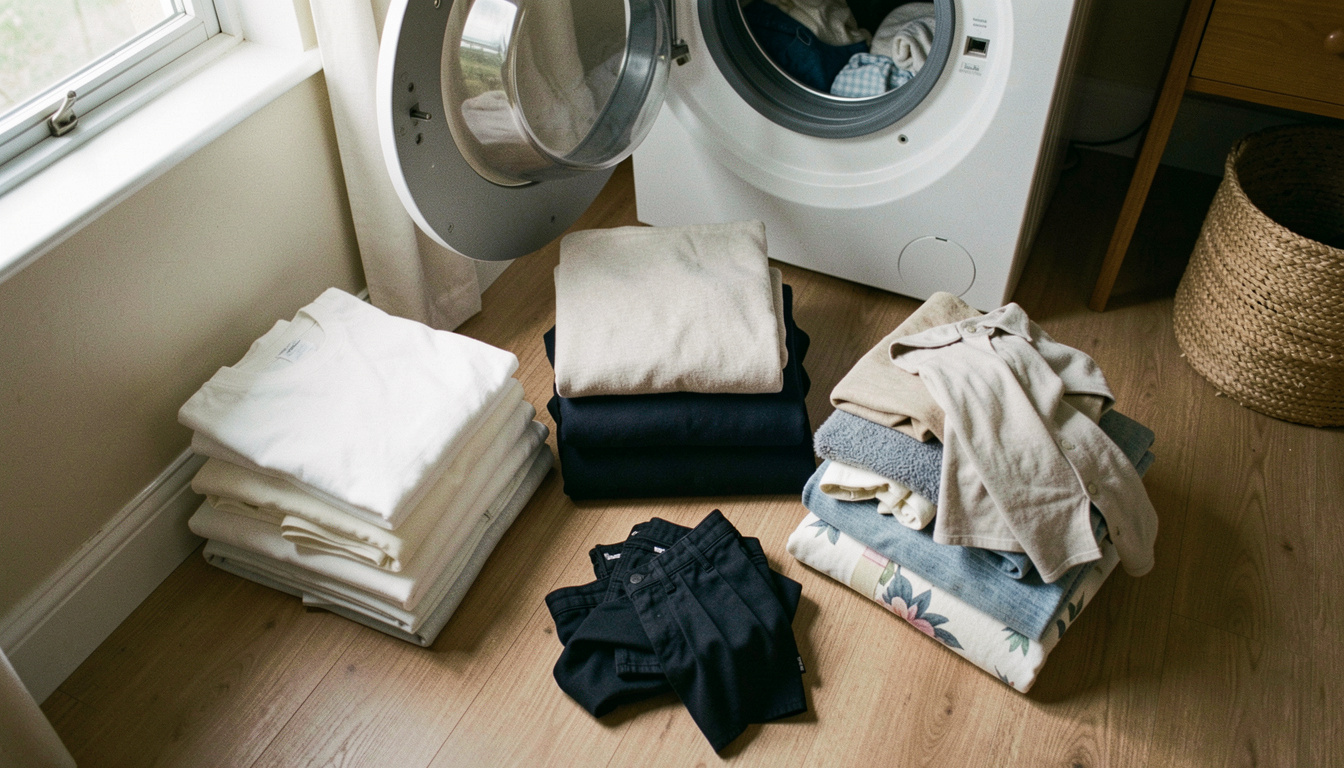
A care label is not advice about the best way to wash something. It is the manufacturer stating the most aggressive treatment the garment is guaranteed to survive. Everything gentler is allowed. That single fact resolves most laundry arguments: a shirt marked 40 can be washed at 30, and usually should be, because heat is what fades colour and shrinks cotton.
It also explains the surprising instructions. A wool jumper marked hand wash may survive a wool cycle at 30 degrees perfectly well, because the risk is agitation rather than water, and modern wool cycles barely agitate. The manufacturer cannot know which machine you own, so the label assumes the worst one.
Where the fabric overrules the label
Three things matter more than the symbols, and none of them appear on the tag.
Fibre content. Read the composition line above the symbols. Elastane loses its stretch above 40 degrees, whatever the tub says, so jeans with four per cent elastane go in at 30. Viscose weakens when wet and should never be wrung. Linen creases as a property of the fibre, not as a fault of the wash. Denim is where this bites hardest: stretch jeans read the same way, and the whole garment is covered in reading a denim label.
Colour. The first three washes of a strong dye will bleed regardless of temperature. Wash new dark items separately, cold, and inside out.
Construction. A garment with a bonded seam, a printed transfer or a foam cup fails at the join long before the fabric fails. Turn those inside out, wash cool, and never tumble them.
When the label has gone
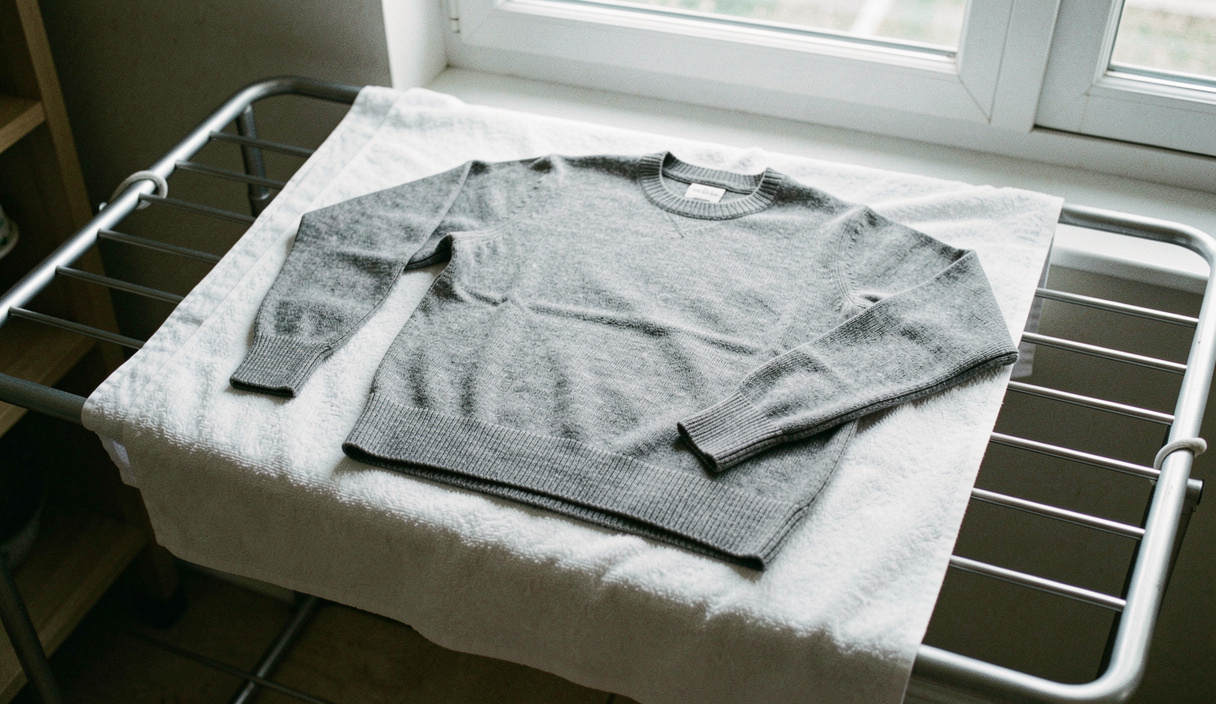
Labels are cut out because they itch, and then the garment becomes a guess. The safe default is 30 degrees, delicate cycle, low or no spin, dried flat if the item is knitted and on a hanger if it is woven. Nothing is damaged by being treated too gently, and the cost is only time. A soft toy reads the same way before it is boxed: the sewn label decides the wash, and the rest of the job is covered in putting the childhood soft toys away whole.
If a garment matters, record it. A line in a notebook, or the label itself pinned inside a folder, means the decision is made once instead of every wash. It is the same principle as keeping receipts and manuals in one box: the information is only worth what it costs to find.
What the label does not decide
It does not decide drying. A garment marked as machine washable can still be ruined by a radiator, which dries the outside while the inside stays wet, or by an airer in a closed room, which puts a litre of water into the air and onto the walls. Where and how washing dries is a separate question, and one worth getting right before the wall behind the airer pays for it, which is the subject of line drying indoors without the damp.
It does not decide frequency either. Towels marked 60 degrees do not need 60 degrees every week, and towels wear out through washing more than through use, which is the argument for rotating four towels per person rather than washing two twice as often.
Spend five minutes at the next wash reading the labels of the six garments you own that you would be sorry to lose. That is the whole exercise. After that the symbols stop being a code and become what they are, a short set of limits.