The household inventory, written once
Write down what the house contains once, room by room, with make, model and date. It takes an evening and it answers questions for years.
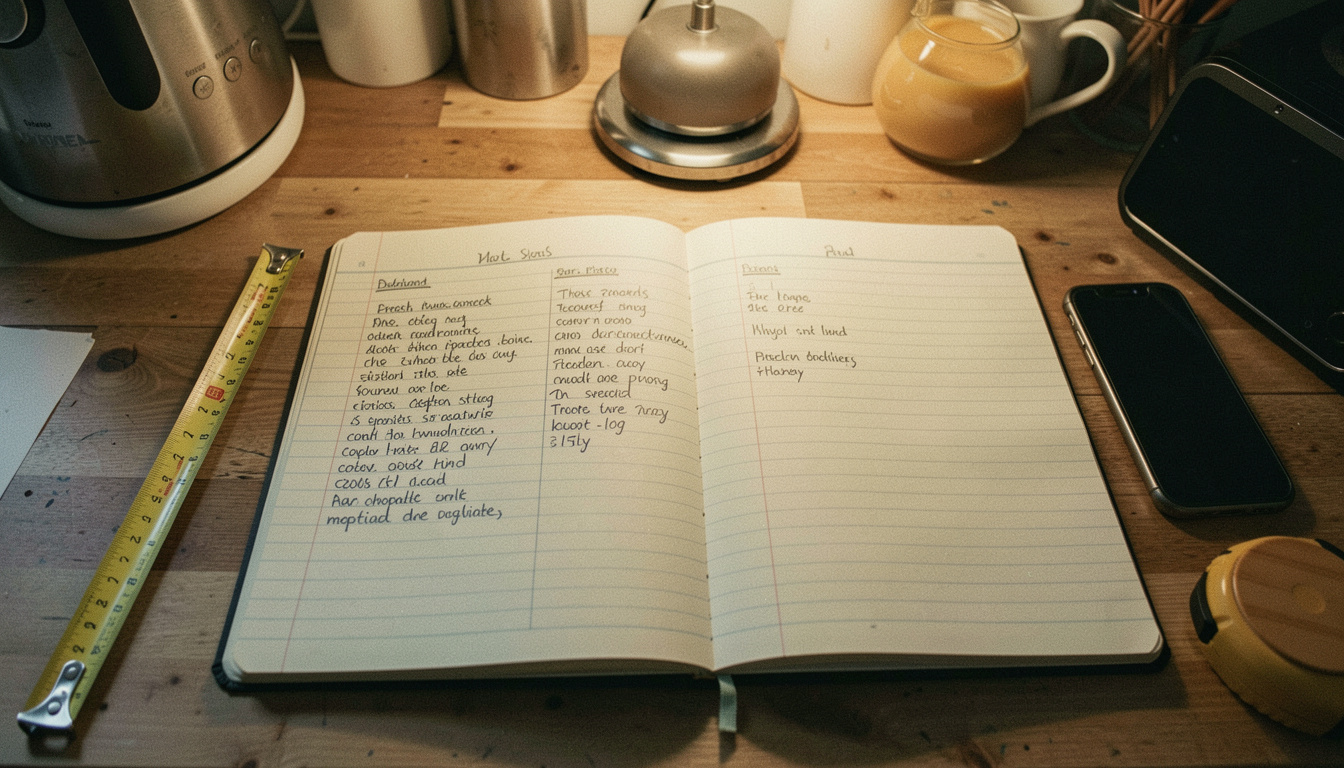
Nobody writes an inventory until they need one, and by then it is too late to write it. After a burglary, a flood or a fire, an insurer asks what was in the house, and a household discovers that it can name perhaps a third of what it owned, without makes, without models and without dates. The claim is then settled on what can be proved rather than on what was there.
The same document answers duller questions all year: which paint was used in the hall, what size the boiler is, when the mattress was bought, what model the extractor filter fits. It takes an evening, and it is the least glamorous and most durable thing a household can write down.
Room by room, in one pass
Do not organise by category. Walk the house room by room, in a fixed order, and write what is in each room. The rooms are what you will use to remember, and they are how an insurer will ask.
Five columns, and no more, or the inventory becomes a project and stops halfway through the second room.
For a leather sofa or chair, write the term from the product specification beside make and model so an insurer sees material and finish. Aniline, corrected grain, nubuck, pigmented, pull-up and bonded describe different material or finish ideas and are not a single ladder from bad to good, so copy the wording instead of guessing from pores and texture. Use the leather terms explained by finish beside the specification and note what the surface will face.
- What it is. Plain nouns. Washing machine, dining table, television, bicycle.
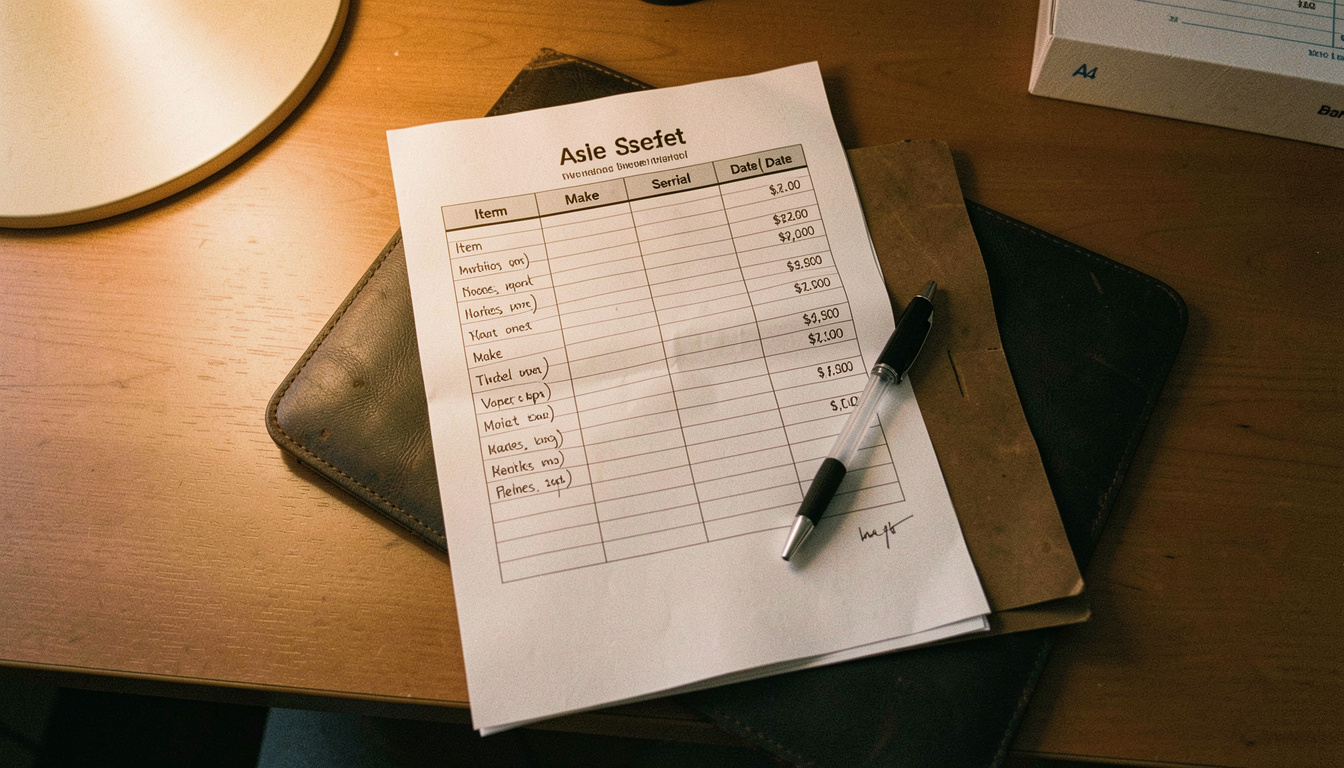
- Make and model. Copied from the rating plate, not from memory. This is the column that pays.
- Serial number. For anything electrical, anything with wheels and anything a police report would need.
- Bought. Month and year, and the retailer if you know it.
- Price. What was paid, not what it is worth now. Insurers calculate the rest.

The photographs matter more than the words
Stand in each doorway and take four photographs, one towards each wall, with the cupboard doors open. Then photograph the rating plates of the large appliances, the back of the television, the serial number on a bicycle frame, and anything individually valuable on its own with something for scale.
A room photograph proves possession of thirty items in one second and it captures all the things nobody thinks to list: curtains, light fittings, the contents of a wardrobe, the tools on a garage wall. Twenty minutes of photographs is worth more than two hours of typing, and the two together are what a claim is actually built from.
Keep a copy outside the house. A list stored only on a laptop in the hall documents, among other things, the laptop that was in the hall. One printed copy elsewhere, or one copy in an email to yourself, is enough.
What else goes in the same document
Once the inventory exists it becomes the natural home for the facts about the building that are needed once a year and forgotten in between: paint names and finishes per room, floor and tile types, bulb fittings and sizes, filter model numbers, the position of the stopcock and the consumer unit, meter serial numbers, radiator key size. What it never holds is the family's history: the names, the certificates and the memorial photographs belong to a family-history folder, which is a different kind of record entirely.
Add the service history as it accumulates, with dates, so that the record of what has been done to the building sits with the record of what is in it. That is the sheet a maintenance schedule feeds into over the years, and it is what makes a maintenance calendar worth more in its third year than in its first.
Keeping it current without keeping it constantly
An inventory does not need maintaining continuously. It needs two rules. Anything expensive gets added on the day it arrives, while the box and the receipt are still on the floor. And once a year, the whole thing gets fifteen minutes at the same time as the receipts and manuals are culled in the box where warranties live: add what came in, strike out what went, retake any room photograph that no longer looks like the room.
That yearly quarter of an hour is also the moment to check that the sum still resembles the cover on the policy. Households drift upward in value without noticing, and being underinsured is discovered at exactly the wrong moment.
What it is not
It is not a list of everything. Cutlery, books, clothes as individual items and the contents of the kitchen drawers do not belong on it. Those are covered as categories with an estimated total, and a photograph of the open drawer does more than any list would.
It is not the place for deadlines and correspondence, which live in the Now folder of the paper drawer and are looked at weekly. The inventory is opened twice a year at most, and that is a sign of it working rather than of it being neglected.
Write the first version badly and quickly. One evening, one room at a time, makes and models copied where they are easy to reach, everything else left blank. A partial inventory written this month is worth more than a complete one that was going to be started in the spring.
The inventory records what the house holds, not what it costs to run. Those are two different lists, and the second one is shorter. Before any appliance is swapped or any room is rearranged, the house has to be read: the annual consumption on the energy bill, divided by the floor area, gives a figure per square metre per year. That figure is the baseline, and it settles what pays back first. The inventory says what is there. The reading says what is worth changing.