Reading a house at eye level
Stand in a doorway and look only at what sits between knee and shoulder height. That band is what visitors see, what children reach, and where clutter actually accumulates.
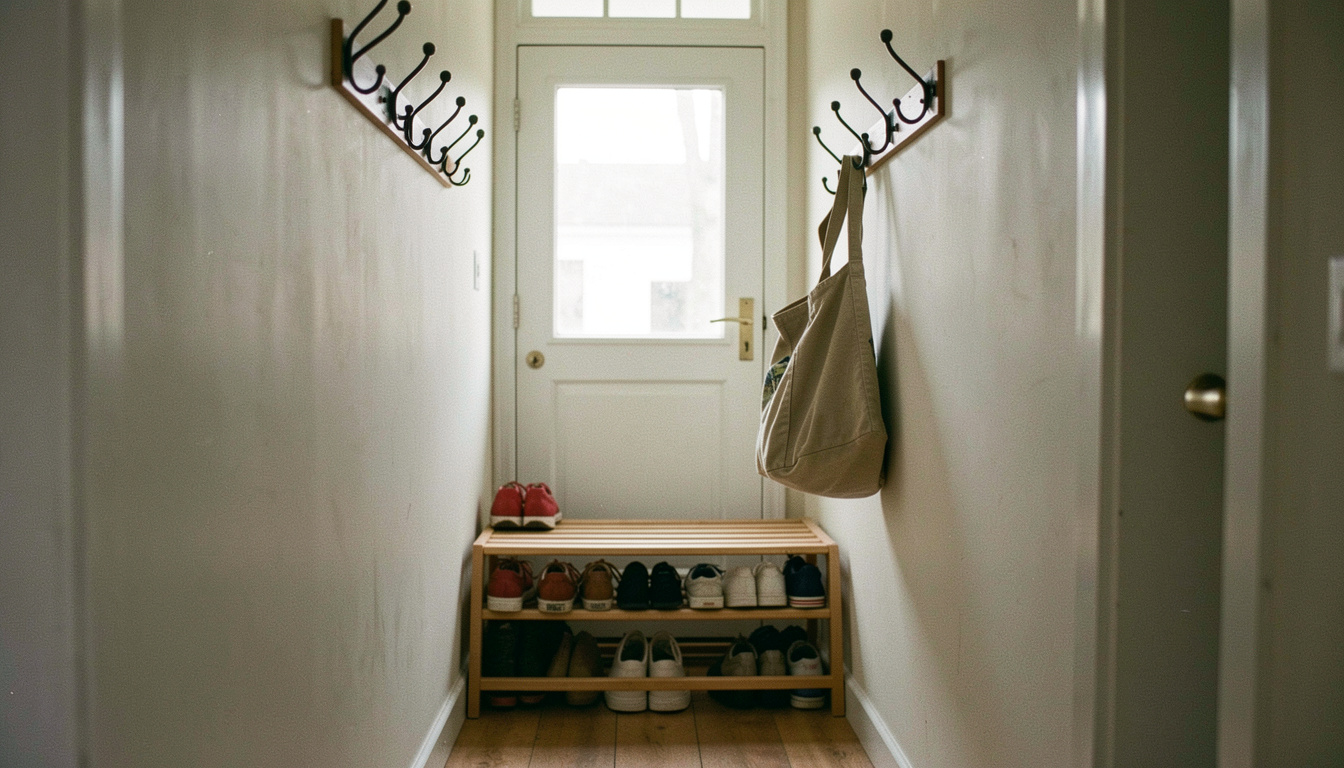
A house is not seen as a whole. It is seen as a band. Standing in a doorway, most of what registers sits between roughly knee height and shoulder height, in the middle distance, on the surfaces that face the door. Above that band the eye stops, below it the eye skips, and what happens in the band decides whether a room reads as kept or not.
This is not about appearances for visitors. The same band is what a household lives in. It is where children reach, where things get put down, and where clutter accumulates because it is the height at which a hand naturally releases an object.
Walking the band
The exercise takes fifteen minutes and it is done once, then repeated after a season. Stand in the doorway of each room, in the position a person entering would occupy, and look at nothing above 1 500 mm and nothing below 400 mm. Write down what you see, in order, without judging it.
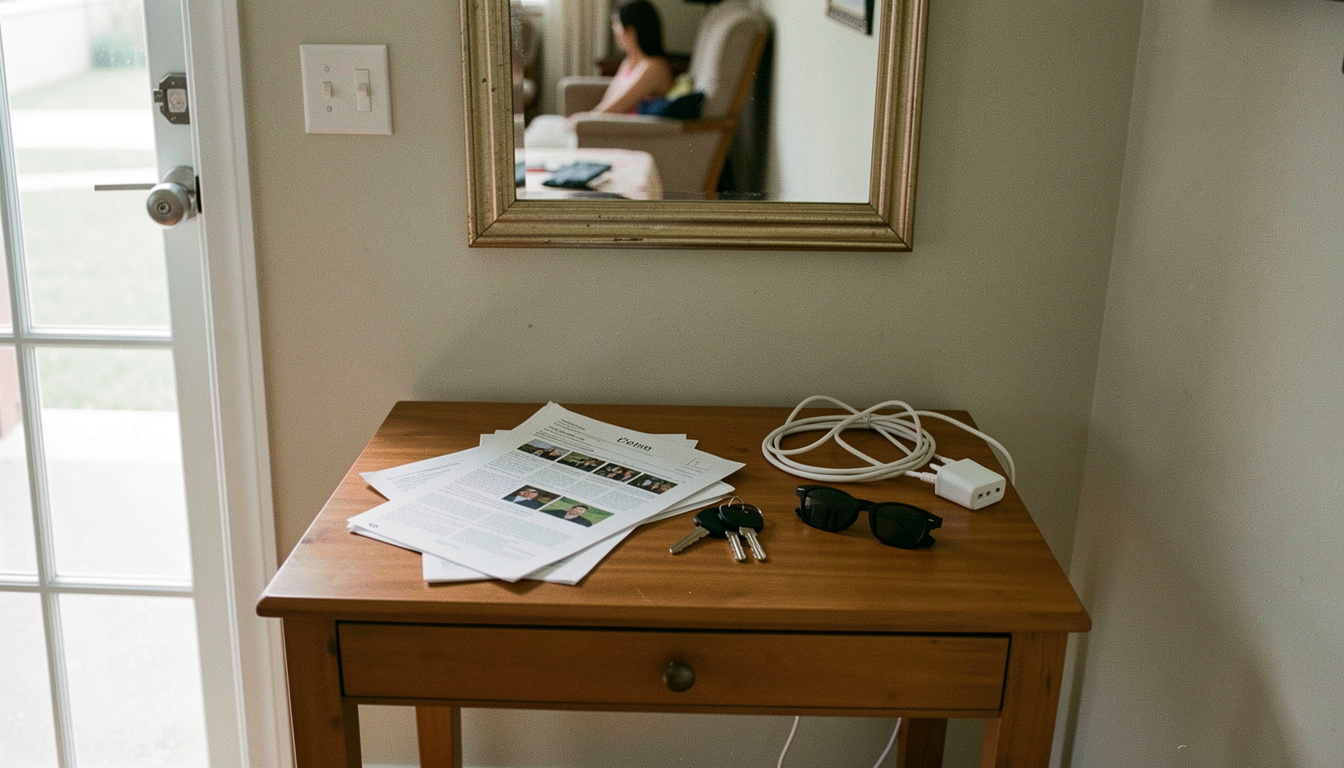
- The first surface the eye hits. Usually a table, a worktop, a chest of drawers or a mantelpiece. What is on it, and how much of it belongs there.
- The floor edges. Bags, shoes, boxes waiting to go somewhere, the corner where post accumulates. The band includes the floor for the first metre of the room.
- Cables and chargers. These live exactly in the band and are the single most common thing that makes a tidy room read as untidy.
- Doors and handles. A door that will not close because something is behind it, a handle with three bags on it.
- The vertical surfaces. The side of a fridge, the back of a door, the wall by the kettle. Paper stuck to a vertical surface is visible at exactly the height the eye is already looking.
What the band is telling you
The band is a report on storage, not on tidiness. Objects gather there because releasing them there is the cheapest option available, which means the correct home is either too far away, too high, too low or behind a closed thing that requires two hands.
The test is worth applying honestly. If four items on the hall table are there every time you walk the band, they are not clutter, they are objects with no address. Giving them one, in the band, is the fix. That is the practical application of letting frequency decide where things live: daily objects belong in the easiest reach of the room they are used in, and if they are not there they will simply live on the nearest surface instead.
The three fixes it usually asks for
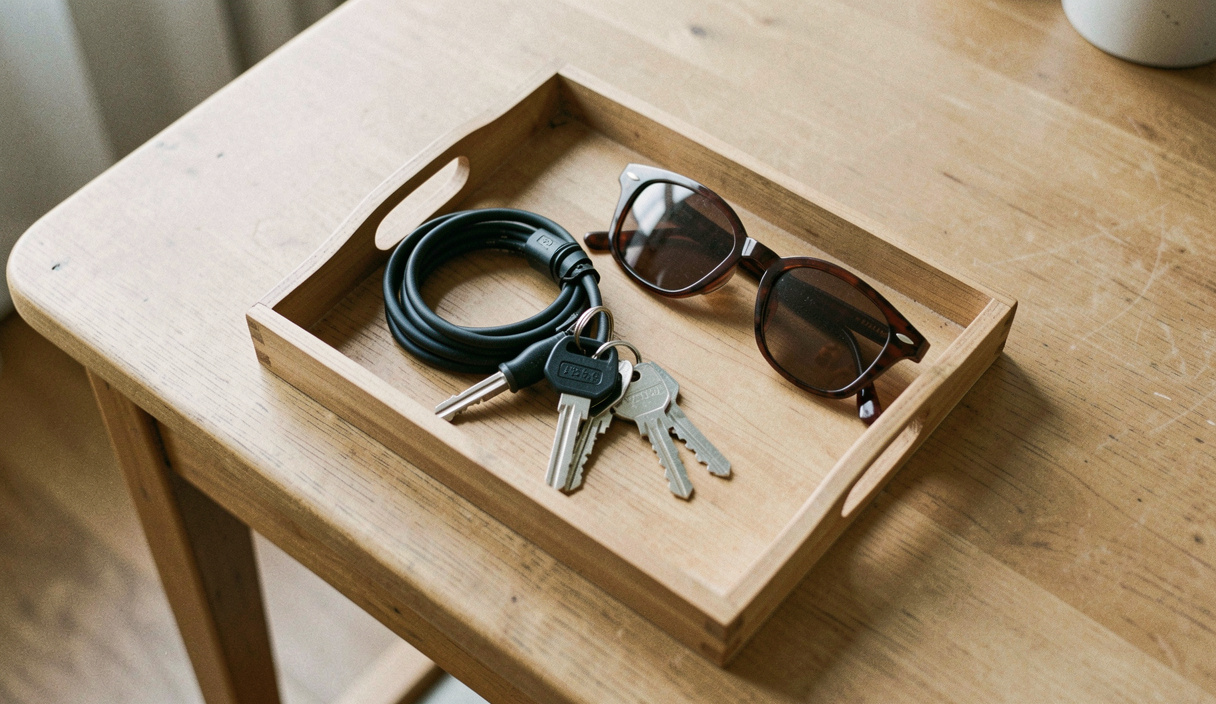
A dish, a hook, a tray. Most bands are fixed by three pieces of furniture that cost very little. A shallow dish for pocket contents, a row of hooks at 1 500 mm for bags and coats, a tray on the worktop that holds the four things that always live there and gives them an edge. A tray works because it converts scatter into one object, and one object reads as intentional. A hook by the back door is also how a dog's lead and towel stop colonising the hall, which is the corner routine in living with a long-coated dog.
Height correction. Coat hooks fitted at adult height are unusable by a seven year old, so the coats go on the floor. A second rail at 1 100 mm solves what any amount of asking will not. The same applies in reverse: anything an adult uses daily that sits below knee height will migrate upward within a month. The same measurement decides the children's reserve: the rainy-day shelf works because it sits above the band the rest of the year.
Removing one thing. Bands are usually crowded by a single large item that does not belong: a drying rack in the hall, a box waiting for a charity shop, a chair that has become a wardrobe. Taking one object out of the band changes the room more than tidying the other twenty.
What the band does not cover
It says nothing about cleanliness. A room can pass the eye level walk and still have a floor that needs doing and a bathroom that needs twelve minutes, and those belong to the weekly hour rather than to a look from a doorway.
It says nothing about the high and low storage that a house needs, and it should not. The top of the wardrobe and the back of the under stairs cupboard are exactly where seasonal and yearly things should be, invisible on purpose, provided they are labelled well enough to be found in a hurry.
It is also not a nightly job. The nightly job is short and mechanical, four rooms against a timer, which is what the fifteen minute reset is for. The eye level walk is diagnostic: it runs once, produces two or three furniture decisions, and then goes quiet for a season.
Doing it in a house you know too well
Familiarity is the difficulty. After a year in a room, the eye edits out the box on the chair. Two tricks help. Photograph the room from the doorway on a phone, because a photograph flattens a room into exactly the band and shows what is actually there. And walk the house in the opposite direction to your usual route, entering rooms from the doors you never use.
Write the findings down and keep the list with the seasonal notes rather than in your head, alongside anything picked up on the seasonal walk around the house. The two surveys look at different things, one at objects and one at water, but they answer to the same discipline: look on purpose, at a fixed interval, and write down what you saw.