Squeaks, drips and the ten minute fix
A squeak, a slow drip and a door that catches are all ten minute jobs while they are small. Kept on a list and cleared in one pass, they never become a trade call.
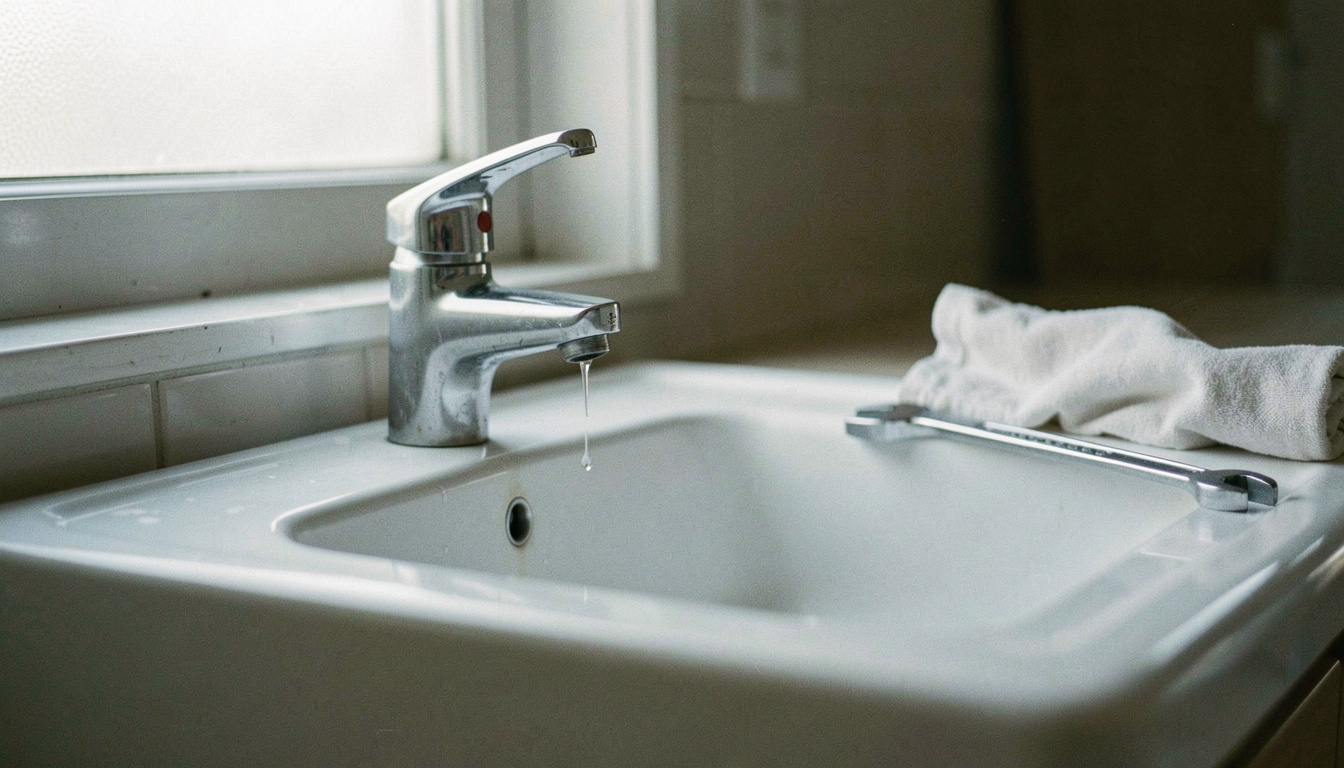
A house accumulates small failures the way a coat accumulates loose threads. A door that catches on the frame, a tap that drips once every three seconds, a handle that has worked loose, a hinge that announces every trip to the bathroom at two in the morning. None of them is urgent. All of them are noticed daily, and the daily noticing is a cost of its own.
They also grow. A drip at one drop every three seconds is somewhere near four litres a day, and the same worn washer that causes it will eventually chew the seat it sits on, which turns a fifty pence part into a new tap. A loose hinge screw becomes an oval hole in the frame. Nothing about a small fault stays small if it is left to work.
The running list
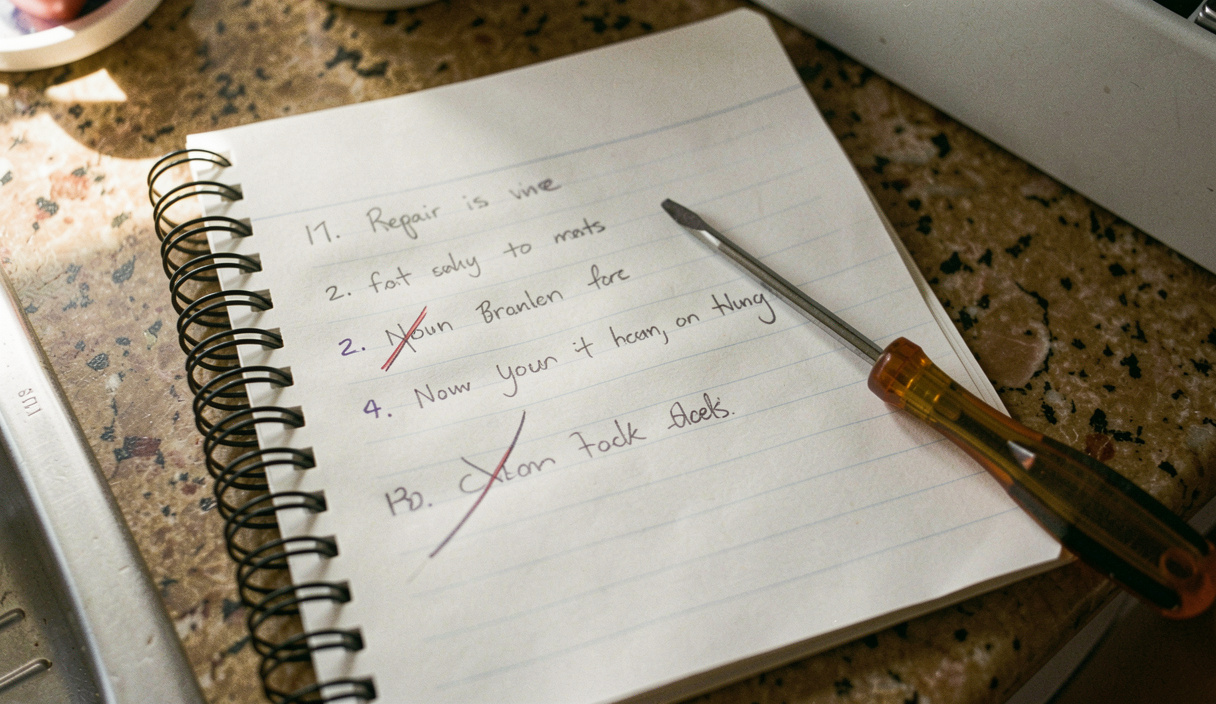
Fixes are not found by looking for them, they are found by living in the house. The mechanism is a list kept where the annoyance happens: a notepad in the kitchen, three words per line, written the moment the thing annoys you.
- Bathroom door catches at the top corner
- Kitchen tap drips, cold side
- Cupboard handle loose, under sink
- Bedroom hinge squeaks
- Bath sealant lifting at the tap end
- Blown bulb, hall
Writing it down does two things. It stops the annoyance being carried around, and it turns six interruptions into one job. Once a month, or when the list reaches about eight items, it gets cleared in a single pass.
What a ten minute fix actually is
The squeak. Almost always a hinge. A drop of light oil on the pin, then swing the door twenty times to work it in, then wipe the run marks off the paint. If the squeak is a floorboard, the fix is different and slower, so it goes on the list as a job rather than a fix.
The catching door. Look at where it rubs. If it catches at the top of the latch side, the top hinge screws have usually pulled loose, and tightening them or replacing one screw with a longer one lifts the door back into square. This is the single most common ten minute fix in any house and it is almost always attempted with a plane instead, which is irreversible.
The drip. On a traditional tap, a worn rubber washer. Water off at the isolating valve under the sink, plug in the basin so nothing small is lost, handle apart, washer changed. On a mixer with a quarter turn action it is a ceramic cartridge instead of a washer, which is a different part and a slightly longer job.
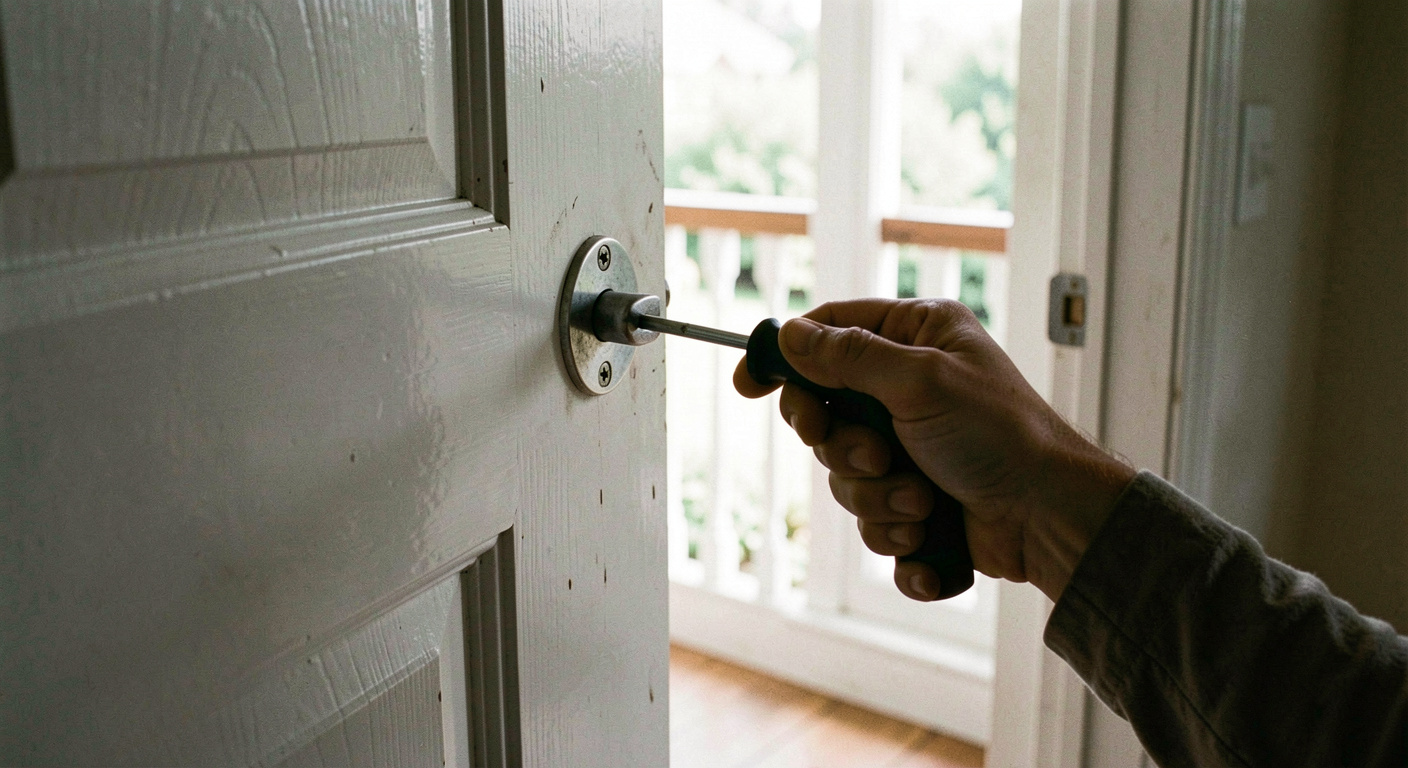
The loose handle or knob. Tighten, and if the screw spins in place the hole is worn: a matchstick and a little wood glue in the hole gives the screw something to bite on again.
The lifting sealant. Cut it out with a blade rather than pulling it, dry the joint thoroughly, then run a new bead. Water tracking behind failed sealant is one of the quiet causes of a stain on a ceiling below.
The kit that makes it possible
The reason small jobs do not get done is rarely skill. It is that the screwdriver is in the shed and the oil is in a box under the stairs. Keep one small tin or box in the house, not in the garage, holding a handful of things: a screwdriver with interchangeable bits, an adjustable spanner, a small hammer, pliers, a craft knife, light oil, PTFE tape, a tube of sealant, a few screws and wall plugs, and a torch.
That box is a daily band object, so it belongs in the easiest storage in the house rather than in the loft, for exactly the reasons set out in where things live, and why frequency decides it.
Where the ten minutes stop
Gas, mains electrical work beyond changing a bulb or a fuse in a plug, anything structural, anything that needs a ladder above single storey, and anything where turning the water off is not enough to make the job safe. Those are not ten minute fixes and pretending otherwise is how a small problem becomes an expensive one with a witness.
There is also a second category to respect: jobs that are simple but slow. Rehanging a door properly, bleeding every radiator in the house, replacing a whole run of sealant. These belong on the maintenance calendar with a month against them, not on a list that is supposed to be cleared in an evening.
Where the items come from
Half the list writes itself as you live in the house. The other half comes from looking on purpose, four times a year, on the seasonal walk around a house: anything found on that walk that can be dealt with in ten minutes with the tools already in the box goes straight onto the running list rather than onto the calendar.
Keep the list, and note the date each item was cleared. Over a couple of years it becomes a quiet record of how a building behaves, and the same tap appearing three times is information: that is not a fix any more, it is a replacement.
A squeak in a floorboard, a drip under a trap, a hinge that has started to groan: most of these are a fixing that has worked loose, not a part that has failed. The ten minute fix is to find the movement, tighten or pack it, and test it again before the tools go away. The same principle holds for anything heavy on a wall, where a mirror stays safe only when its weight is carried by a fixing set into masonry or a stud. Kept sets out how silvering is done and how the pane is held and cleaned.
A squeak or a drip rarely needs a specialist. Ten minutes with a torch, a cloth and a screwdriver settle most of them: tighten the hinge, reseat the washer, dry the joint and watch it for a day. The same holds for the back of a television, where the fault is usually a loose lead rather than the set. Kept sets out the order of the three decisions, lead, socket, housing, so the result is cabling that can be serviced without pulling the furniture out again. Note what you changed and the date, and the next occurrence is a glance rather than an afternoon.
A squeak under a chair leg or a drip beneath a sink is usually a small thing: a loose screw, a dry washer, a joint that has shifted by a millimetre. The ten minute fix is to tighten, reseat or wipe before the fault spreads. The same patience applies to surfaces. Before deciding how to clean or repair a piece, it helps to know what a veneered panel does differently from solid timber, since the answer changes the cloth, the pressure and the drying time. Read the finish first, then reach for the tool.